



Cortisol Face: What Causes Facial Puffiness & How to Create a Grounding Facial Ritual
Feeling puffy, holding tension in your jaw, or waking up with a face that looks a little different? Here's what to know about cortisol, stress and facial puffiness - plus a simple ritual to bring a little more intention to your self-care.
Puffiness. Fluid retention. A face that feels a little more swollen than usual.
If you've spent any time on social media lately, you've probably come across the term cortisol face - the idea that stress and elevated cortisol levels can leave your face looking puffy, round or inflamed.
It's a compelling explanation, especially when you're feeling overwhelmed, sleeping poorly or simply not feeling like yourself.
While a puffy face doesn’t automatically mean your cortisol is high, it can be a reminder to check in with your body, slow down and give yourself a little extra care.
Understanding what's happening in your body can help you approach facial care with more intention, without turning another normal bodily change into something you need to fix.
What is cortisol, and how does it affect your body?
Cortisol is a hormone produced by your adrenal glands. Often called the stress hormone, it helps your body respond to challenges by regulating processes including blood pressure, blood sugar, metabolism and your sleep-wake cycle.
Cortisol isn't inherently bad. It's essential to your health, and your levels naturally fluctuate throughout the day and in response to stress.
The conversation becomes more complicated when cortisol levels remain abnormally elevated over a prolonged period.
Sustained excess cortisol can cause a condition called Cushing's syndrome, which may lead to a rounder, fuller face, alongside other symptoms such as weight gain, skin changes, muscle weakness and elevated blood pressure. This is different from the temporary cortisol increases that happen during everyday stress.
When stress starts to show up in how you feel, slow down.
We spend so much time looking for ways to change what we see in the mirror.
The next product. The next treatment. The next routine promising to make us look a little less tired, a little less puffy, a little more like ourselves.
But sometimes, the most useful place to begin isn't with another thing to fix.
It's with a moment to pause.
A few slow breaths. A walk outside. A nourishing meal. An earlier night. A little less stimulation at the end of a long day.
These simple practices aren't a treatment for high cortisol, but they can support your overall wellbeing and help you create a more intentional relationship with self-care.
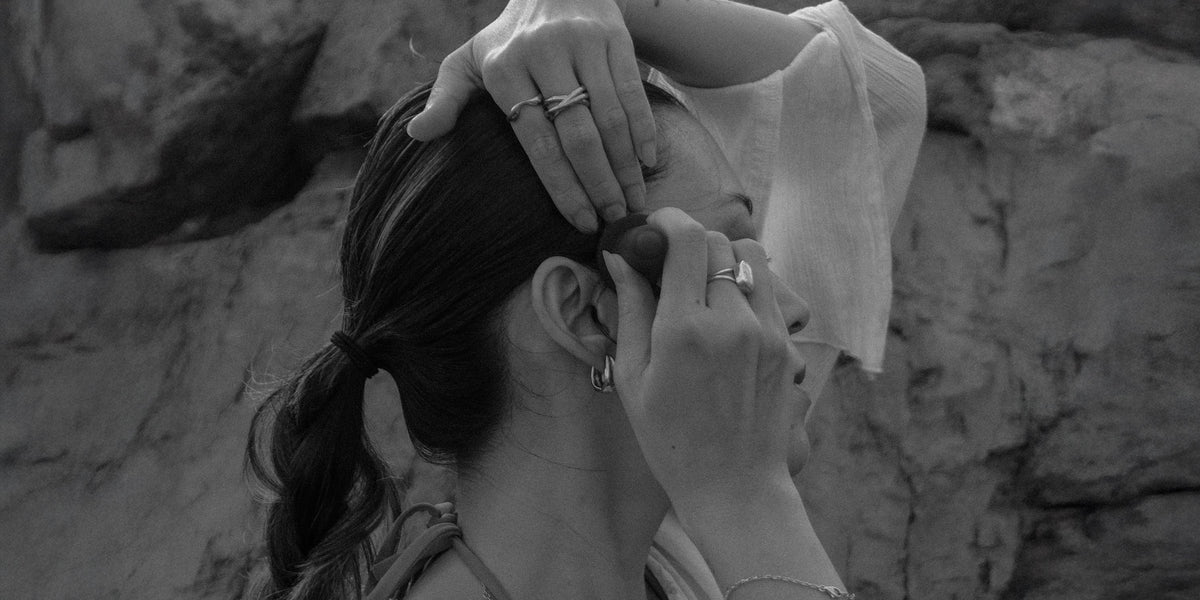
And when it comes to caring for your face, a gentle facial massage can become a lovely way to slow down and reconnect with yourself.
Your 5–10 minute facial cupping ritual
Facial cupping and gentle massage are practices you can incorporate into your skincare routine for a few quiet minutes of intentional care.
Gentle facial massage can help to reduce the appearance of puffiness, although results vary and it won't treat the underlying causes of facial swelling or lower cortisol levels.
You don't need an elaborate routine. Just a suitable facial oil, clean facial cups designed for facial use, and a few uninterrupted minutes.
01 — Begin at the neck
Apply a little facial oil to clean skin so your tools glide comfortably. Using very gentle pressure, begin with slow movements around the sides of the neck, following the instructions provided with your facial cups.
Avoid creating strong suction or dragging the skin.
02 — Move along the jaw and cheeks
Work slowly across the jawline and cheeks, using light, controlled movements. Keep the cups moving rather than holding suction in one place.
Let this be an opportunity to notice where you hold tension and to soften your movements.
03 — Give your forehead a little attention
Continue with gentle strokes across the forehead, following the tool's instructions and avoiding the delicate eye area.
There's no need to rush through each step. The intention is to make the practice feel calm and comfortable.
04 — Finish with a pause
Finish your routine with a few gentle movements back towards the neck, if appropriate for your tool's instructions.
Set your cups aside. Take a few slow breaths. Notice how your skin feels, unclench your jaw and give yourself a moment before moving on with your day.
Five to ten minutes. No complicated routine. Just a little time to reconnect with yourself.
A note on safety: Avoid facial cupping over broken or irritated skin, active inflammation or areas that bruise easily. Strong suction can cause bruising and broken capillaries. If you have a skin condition or are unsure whether cupping is suitable for you, check with a qualified professional first.


Description
21 days to reconnect with yourself
This is not another wellness routine to keep up with.
It is a place to return to.
The slō. Rituals Library is a 73-page digital guide designed to bring you back to yourself - one small, intentional practice at a time. Over 21 days you will move through body rituals, nervous system care, TCM-inspired nourishment, energy work, and gentle self-reflection - all woven together into a daily practice that asks less than 20 minutes of you and gives back far more.
Each day includes one core ritual and one optional deeper practice for those who want to go further. There is no falling behind. No catching up. Just the page that meets you where you are.
What's inside
Week 1 — Return
Coming back to the body. Dry brushing, the shower ritual, a warming TCM tea blend, the hair and scalp ritual, a guided body scan, and your first rest day. Awakening sensation, slowing the nervous system, noticing without changing.
Week 2 — Nourish
Going deeper. A nourishing breakfast ritual with Jess's personal morning recipe, body gua sha, movement as medicine, nervous system regulation (including EFT tapping, humming, and breathwork), facial cupping, an introduction to self-Reiki and energy work, and your halfway reflection.
Week 3 — Integrate
Making it yours for life. Body cupping, cycle and moon awareness, a flower and beauty ritual, a digital detox morning, the evening wind-down ritual, your personal slō. ritual blueprint, and a closing ceremony on Day 21.
What you'll need
A journal. A pen. A quiet space. And your body.
The slō. tools help - but your hands are always enough to begin.
73 pages. 21 days. Less than 20 minutes a day.